
If you are self-employed, understanding allowable business expenses can help ensure that you do not pay more tax than necessary. Generally, qualifying business expenses can be deducted from your business income when calculating your taxable profit. However, an expense must normally be incurred for legitimate business purposes to qualify.
Common office and business expenses can include stationery, printing costs, postage, business software, accounting software, printer ink and certain small office equipment. Subscriptions to software used specifically for your business may also qualify where they are genuinely connected with your business activities.
If you use your mobile phone or internet connection for business purposes, you may be able to claim the business-related proportion of the cost. For example, if your phone is used for both personal and business purposes, you should generally only claim the proportion that relates to business use.
Certain business travel costs may also qualify as allowable expenses. These can include business mileage, train fares, parking charges, taxi fares and hotel accommodation for qualifying business trips. Normal commuting between your home and a permanent workplace is treated differently from genuine business travel, so it is important to understand the purpose of each journey.
Many self-employed people run their businesses from home. Depending on your circumstances, you may be able to claim a proportion of certain household costs relating to business use. These can potentially include electricity, heating, internet, council tax, rent and, in some cases, mortgage interest. The amount you can claim depends on how your home is used for business and which method you use to calculate the expense.
Certain professional and financial costs may also be deductible. These can include accountancy fees, business insurance, relevant professional memberships, certain legal costs relating to the business and bank charges on business accounts. The expense should have a genuine connection with your business activities.
Advertising and marketing costs can also form part of your allowable business expenses. This may include website expenses, online advertising, Google Ads, printed flyers, business cards, social media advertising and marketing agency fees. These expenses can be particularly important for freelancers, sole traders and small businesses that rely on ongoing promotion to generate new customers.
Training expenses may sometimes qualify when the training updates or improves skills you already use in your existing business. However, training that prepares you to enter an entirely new profession or start a different type of business may be treated differently for tax purposes.
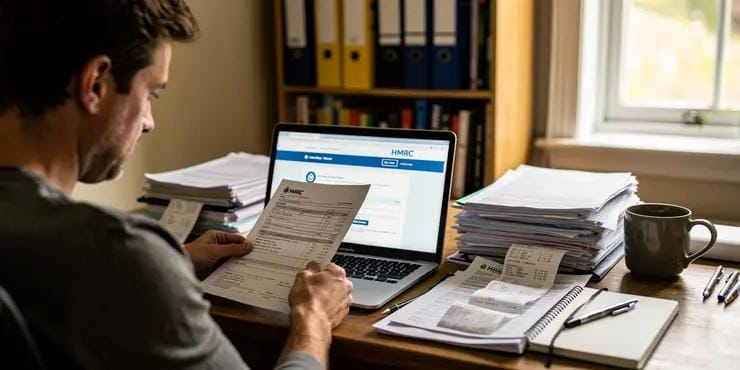
Good record keeping is essential when claiming business expenses. You should keep invoices, receipts and other supporting records so that you can explain how an expense relates to your business if required. Using digital bookkeeping software can make this process easier and reduce the risk of losing important documents.
Purely personal costs should not normally be claimed as business expenses. Where an expense has both personal and business use, only the appropriate business-related proportion should generally be included in your Self Assessment calculations.
Allowable expenses can legitimately reduce your taxable business profit, but incorrect or unsupported claims may create problems with HMRC. Keeping accurate records and understanding which expenses qualify can help you complete your Self Assessment Tax Return correctly.
EasyFig can help review your income and expenses, identify legitimate deductions and prepare your Self Assessment Tax Return accurately.
Want to make sure you’re claiming the right expenses? Speak with the EasyFig team for professional Self Assessment support.